View this mail in your browser

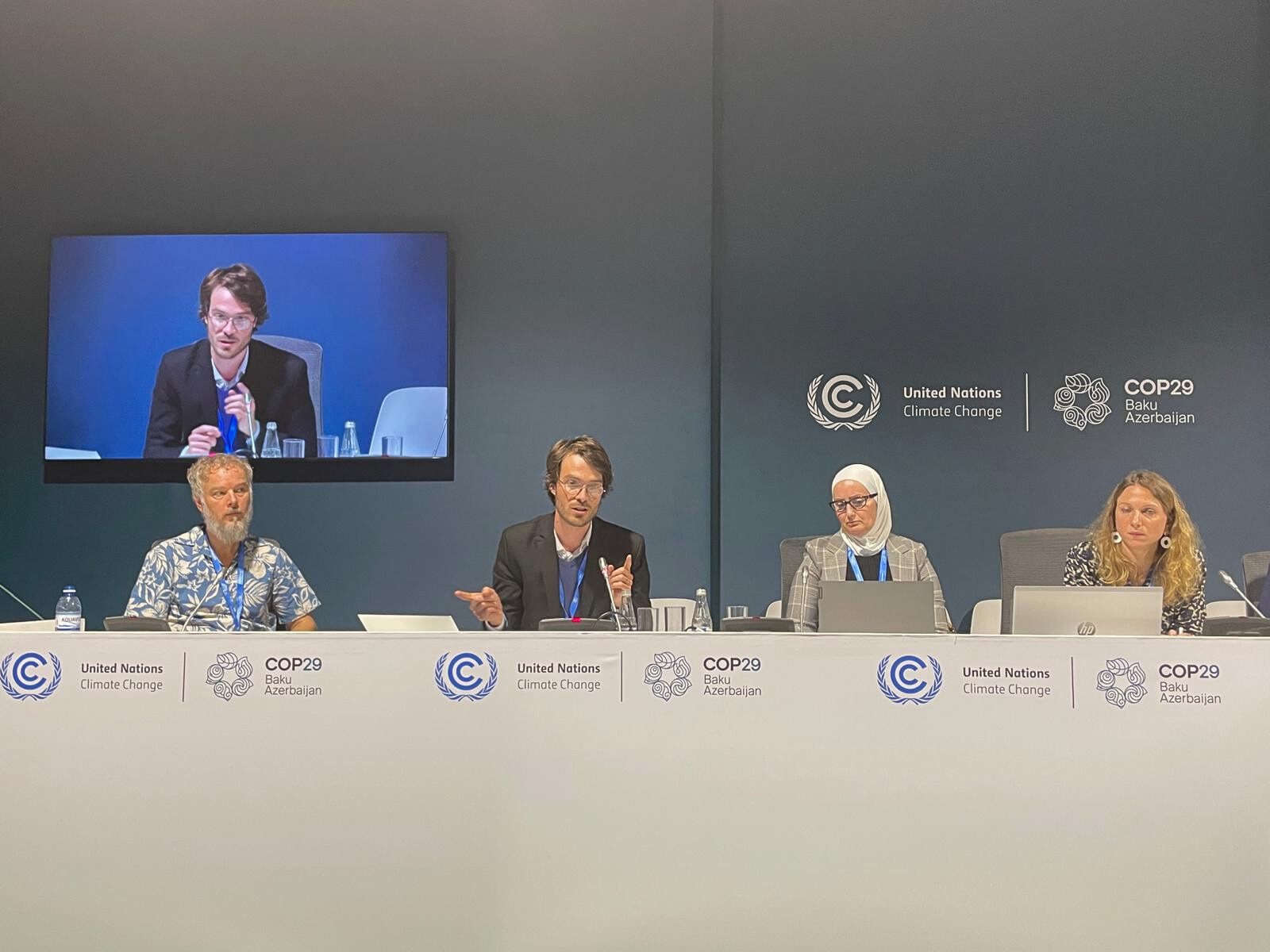
IMPACT was present at COP29 in Baku, Azerbaijan, participating in various panels and discussion with a key focus on advocating for the use of robust evidence and local knowledge to better prepare and respond to climate driven emergencies in fragile and conflict affected contexts. 

Humanitarian data can play a key role in this effort. Helping to inform risk reduction, adaptation, and resilience-building strategies in crisis-affected areas, enabling actors to anticipate and act ahead of disasters. It's to this end that IMPACT continues support these efforts through its multiple assessment programs in countries affected by climate change, and as a member of the Santiago Network on Loss and Damage.

Driving Solutions: IMPACT's role in building the loss and damage evidence base

These publications emphasized the need for more comprehensive data to quantify the impacts of displacement, particularly by focusing on the measurement of displacement-related loss and damage. They also aimed to understand the range of losses experienced by communities forced to move due to climate shocks, including both economic and non-economic losses.

Launch of the report: "No Escape: On the Frontlines of Climate, Conflict and Displacement"

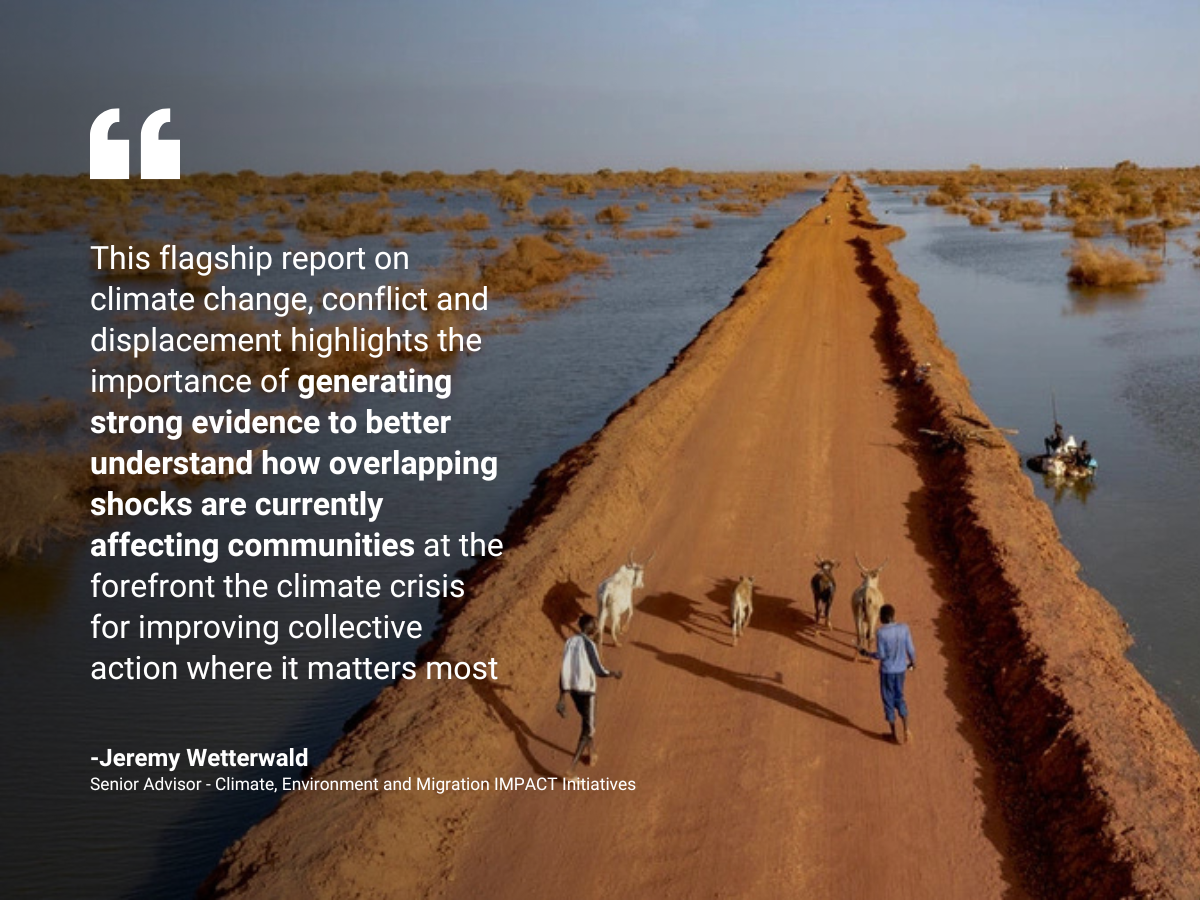
At COP29, UNHCR along with IMPACT Initiatives and 12 other expert organizations, research institutions and refugee led organizations launched the report“No Escape: On the Frontlines of Climate, Conflict and Displacement”

In fragile contexts worldwide, the overlap between conflict, climate change, and displacement is becoming increasingly visible. Extreme weather events—such as droughts, floods, and rising temperatures—are worsening humanitarian conditions and triggering new cycles of displacement. For those who’ve already fled war, violence, and persecution, the climate crisis adds a new layer of vulnerability—yet they often lack the funding and support needed to adapt.

This report explores this critical intersection and points to the gaps in current climate financing, the urgent need for legal protections for climate-displaced populations, and the critical role of resilience-building in fragile, conflict-affected areas. 

As projections show that by 2040, the number of countries facing extreme climate threats will rise from three to 65, the report sounds an urgent call for global action to prevent pushing those who are already in danger into even more dire situations. 

Read the full report

IMPACT Quarterly Picks

Introducing the new quarterly picks, here you will find a selection of our  latest data and analysis covering a range of themes and countries.

BURKINA FASO

In 2024, Burkina Faso faces an ongoing humanitarian crisis driven by armed conflict, largescale displacement, and growing strain on essential services and resources. Our recent Multi-Sector Needs Assessment (MSNA) identified alarming health and food insecurity conditions, particularly in the provinces of Tapoa (Eastern Region), Loroum (North), and Oudalan (Sahel). Learn more in our brief (French) 

UKRAINE

As temperatures drop, millions of Ukrainians are at heightened risk due to ongoing conflict, damaged infrastructure, and severe resource gaps. Ensuring access to heating, cold and hot water, and essential supplies is a matter of urgency this winter. Our 2024 winterization assessment provides an in-depth analysis of the most vulnerable regions and populations for immediate intervention.   

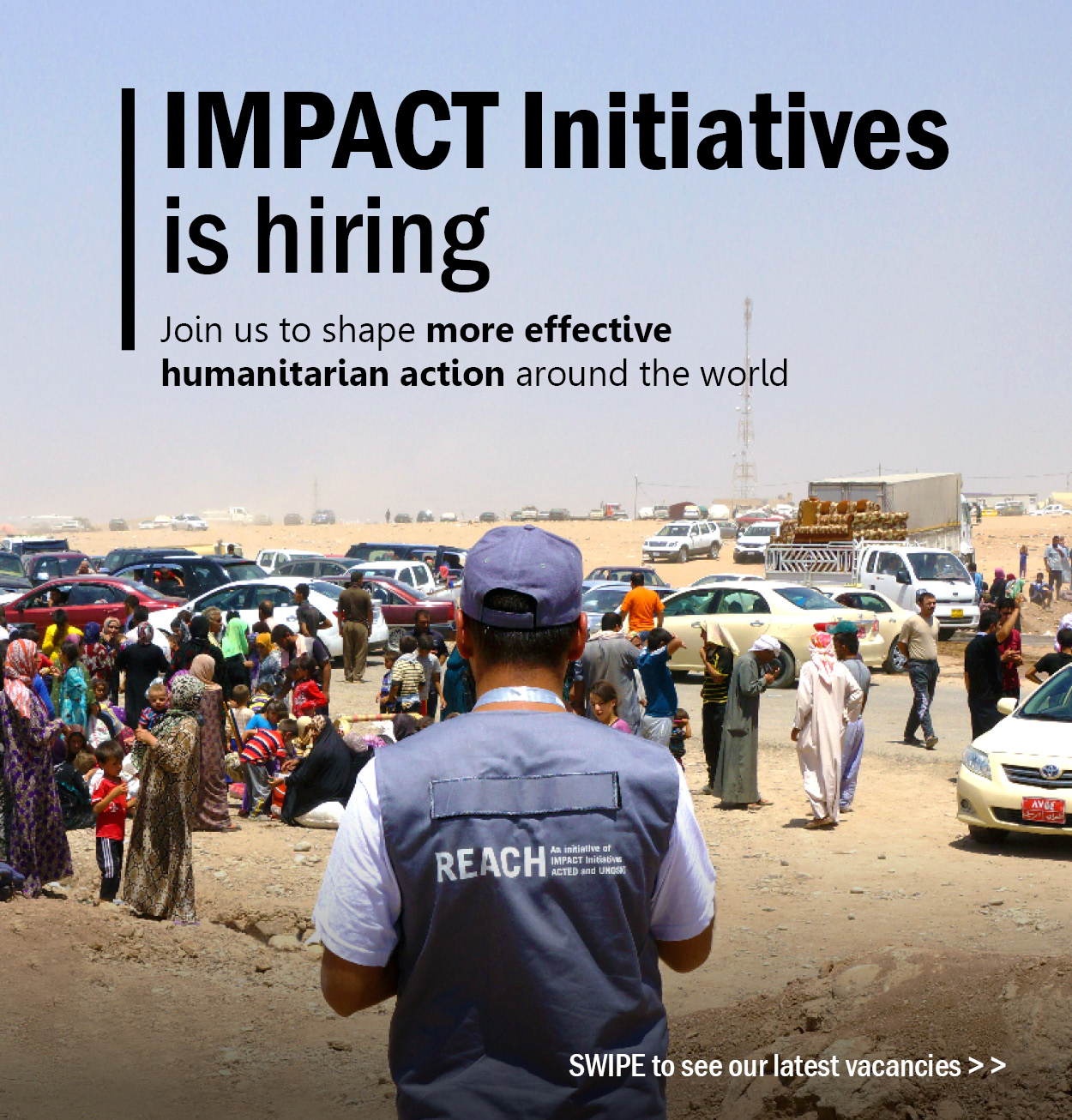
Interested in working with IMPACT? Check out our latest vacancies!

Nigeria | Country Coordinator
Central African Republic | Coordinateur.rice / Représentant.e pays
Occupied Palestinian Territory | Deputy Country Coordinator 

About IMPACT

IMPACT Initiatives is a think-and-do-tank based in Geneva. IMPACT aims to shape practices and influence policies in humanitarian and development settings, in order to positively impact the lives of people and their communities. IMPACT is a Geneva-based is the largest independent data provider in contexts of crisis. We aim to support a range of stakeholders to make better, more informed decisions in humanitarian, stabilisation, and development settings. We believe that a key pathway to better planning and decision-making is direct engagement with local communities and their leaders.  

IMPACT takes an initiative-based approach to structuring our programming. Each initiative – REACH, PANDA and AGORA – has a specific aim, operational model, and portfolio of solutions.  Discover more on our website.

Stay up-to-date on our latest insights and analysis by subscribing to our newsletter.

Or access all our data and information products on our Resource Centre!

Unsubscribe here.